Tag Archives: Texas Highways

If I can just get off of that [Austin] freeway without getting killed or caught . . .

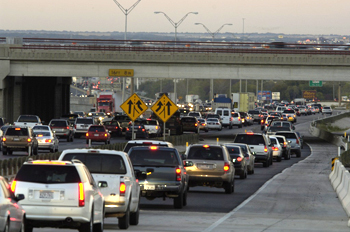
Jerry Jeff Walker should be singing about freeways in Texas.  Any laments about an L.A. Freeway are passé, and JJW need only travel a few miles in his attempt to avoid getting killed or caught. The Texas Department of Transportation has issued its annual Top 100 Congested Roadways  list and I-35 in Austin from Hwy 290 to Hwy 71 has been named the most congested stretch of highway in the state.  The stretch of I-35 (known to long-time Austin residents as “Interregional”) has surpassed the West Loop in Houston to claim the number one place in Texas to while away the hours waiting in traffic.  Fortunately, Red’s intimate knowledge of Austin’s highways and byways allows him to generally avoid the parking lot that is I-35 whenever he graces the Capital City with his presence.  In Houston, however, the West Loop can be damn near unavoidable because of the complete absence of crossings of Buffalo Bayou in the western part of the Inner Loop area.

Photo from the TXDOT.

Today in Texas History – September 9

From the Annals of Big Government –  In1966, President Lyndon B, Johnson signed the National Traffic and Motor Vehicle Safety Act and the Highway Safety Act. The two bills made the federal government responsible for setting and enforcing safety standards for cars and roads. “In this century,” Johnson said before he signed the bills, “more than 1,500,000 of our fellow citizens have died on our streets and highways; nearly three times as many Americans as we have lost in all our wars.”  Detroit’s refusal to make safer cars was notorious and consumers had little choice at the time as foreign cars were almost non-existent on US roads.   “Safety is no luxury item,” the President declared, “no optional extra; it must be a normal cost of doing business.”

Detroit managed to eliminate some of the safety standards in the original bill.  Older readers will recall the decades long fight car makers put up against installing air bags.   However, the impact of the NTMVSA was noticeable.  All cars now had seat belts for every passenger, impact-absorbing steering wheels, rupture-resistant fuel tanks, door latches that stayed latched in crashes, side-view mirrors, shatter-resistant windshields,  windshield defrosters, lights on the sides of cars and other protections.   It is almost impossible to estimate the number of lives that was saved by these acts.

The Acts passed without a single negative vote in Congress – something that is unimaginable in today’s world.

Speed on Brother, Hell Aint Half Full (of Texans) Yet.

Texas is the best place to speed in the US.  Anyone who has recently driven on the racetrack that is I-10 between Houston and San Antonio can testify to that fact.  Red was doing 85 in the right line recently and cars were blowing by in the left lane at speeds up to an estimated 105 mph. And why not drive like the proverbial bat released from Hades?  According to WOAI – the consequences of speeding are much less in Texas than in the rest of the country.  Red would argue that the chances of actually getting a speeding ticket in Texas are slim.  The DPS has been stretched to thin by Gov. Abbott (TP-Texas) sending them on a fool’s errand on the Texas border. Trying to enforce Texas law is weak tea compared to grandstanding on immigration issues.

Texas has by far the most lenient speeding laws in the country, according to a study by WalletHub.com.  WalletHub analyst Jill Gonzales says they measures a number of factors, from that the posted speed limit is, to how strict the penalties are for people who have been apprehended.

 One example, Gonzales says, is at what point the minor offense of ‘speeding’ gets kicked up to the far more series offense of ‘reckless driving.’   For example, in Virginia, driving more than 20mph over the speed limit is automatically considered to be ‘Reckless Driving,’ and a motorist can get up to three months in jail for the first offense.  She says Texas is one of the few states where speeding is never considered reckless driving, no matter how fast you’re going.

 “Texas has no limits, so it is unclear what is reckless driving to the police officer who pulled you over,” she said.

 Almost every other state considered a third offense of speeding over a certain amount to be reckless driving, but Texas doesn’t.

  “There is no minimum jail time for the first or the second offense, and there is no license suspension on the records, either.”

Gonzales says Texas is also one of a handful of states without an ‘absolute’ conviction for going over the speed limit.  In most states, a radar reading of 10 miles over will be adjudicated guilty by a judge, but in Texas, a motorist can argue that there were extenuating circumstances, like the motorist was passing a vehicle or trying to avoid an accident.

Texas also gets high marks for outlawing cameras to register a motorist’s speed and automatically send a ticket, about a third of the states allow that.  Texas also does not have additional penalties allowing an officer or a judge to bump a routine speeding arrest up to ‘aggressive driving.’

Texas also caps the fine for speeding to $200.  In many states, the fine can be $1,000 or more.  In Virginia, for example, the fine for speeding can be $2,000, in Washington state its $5,000.  Texas also does not allow license suspension for speeding.  The aforementioned Virginia allows a motorist’s license to be suspended for up to 3 months for a first offense.

 And, to top things off, Texas has hundreds of miles of I-10 and I-20 in west Texas where the speed limit is 80 mph, and a stretch of State Highway 130 with a posted 85 mile speed limit, the highest in the Western Hemisphere.

Photo from http://www.autoblog.com

Click It or Ticket – or Just Ticket

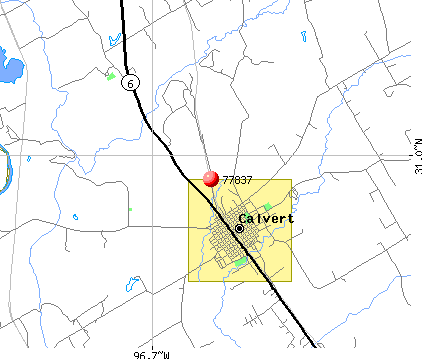
A stretch of Highway 6 has apparently become infamous for the amount of speeding tickets issued by a trio of Texas towns.    WFAA pulled ticket files on a group of cities along I-45 to prepare a story, but the “problem” apparently extends beyond that Interstate. Hearne, Calvert and Lott are apparently funding local government operations through nabbing speeders on the venerable highway.   The Blaze explains.

After that story aired, a local judge who had volunteered for 15 years contacted the station to say the problem is even more widespread and that it got so bad in his area, he resigned.

“When I first became a judge, we had one reserve officer,” David Viscarde, the former judge in the town of Calvert, told WFAA. “That’s all he did on Friday and Saturday every other weekend. He’d write 100 citations.”

So why? Well, many local governments, and especially police departments, are funded by tickets and municipal court fees, the station says.

The outlet calls it the new area the “Texas triangle,” named for the three-city area southwest of Waco, Texas. Here’s how bad it is in those towns, Hearne, Lott and Calvert:

Hearne has just 4,400 people, but it has more than 12,000 municipal court cases pending, records show.

Lott is one of the top 20 in the state for pending municipal court cases, records show. The town’s mayor, Anita Tindle, would not provide budget numbers. But state records show Lott has more than 3,400 municipal court cases pending. That’s nearly five cases for each of its 743 residents.

Calvert, also in the top 20 for pending cases, also declined to provide financial numbers. But state records show it has 5,159 municipal court cases pending — which is nearly five for each of its approximately 1,100 residents.

“The pressure to collect revenues in Calvert — and probably other small towns in Texas — is excessive,” Vicarde said. “And what happens is, you got judges like me who say they’ve got better things to do with my time. ‘Thank you very much, and God bless you, I’ll move on.’”

So what happens if you find yourself in the town of Calvert with a ticket in hand? Vicarde has some inside information:

Former Judge Viscarde says small towns bank on no one taking their traffic tickets to court and simply mailing in a check. He said Calvert is incapable of trying cases because it has no prosecutor, and doesn’t want to pay for one.

According to WFAA, the state of Texas does have the ability to audit and fine towns who get more than 30 percent of their revenue from traffic tickets, but none of the three towns mention have ever been investigated.

Red drives this route at least ten times a year and has noticed that there is almost always a police car stationed on the north side of Calvert, but has not otherwise noticed excessive police presence in the area.   Red also notes that people drive too damn fast in general.  Ever since 75 mph became the norm, left lane traffic is ripping along at 90 mph.  I really don’t blame these towns for enforcing the speed limit.  The problem would be solved if everyone slowed down just a bit.   As Red’s Dad used to say, “They sure are in a hurry to go somewhere and do nothing.”

A Buck a Mile – Well, Almost

The Harris County Toll Road Authority has announced that it is increasing the top toll rate on the Katy Tollway (running down the middle of I-10).  With the increase, the price of a complete trip along the lanes will jump from $7 to $10 for the 12-mile route during peak commuting times. Not quite a buck a mile.  Thanks Rick Perry!