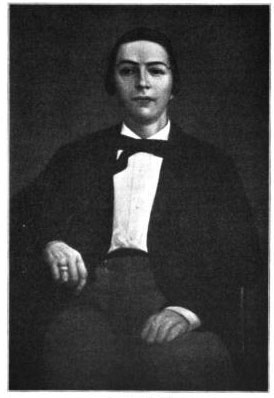
From the Annals of the Civil War – In 1864, the Boy Martyr of the Confederacy was hanged in Little Rock, Arkansas. David Owen Dodd, a native of Victoria then living in Arkansas, had carried some letters to business associates of his father in Union held Little Rock. He obtained a pass to return to his family in Camden, but a guard destroyed it when he entered Confederate held ground. After spending the night with his uncle, he wandered back into Union territory. Union soldiers determined that he did not have a pass and upon a search found that he was carrying a notebook with Morse code annotations describing the location and strength of Union troops. He was arrested and tried by a military tribunal. Dodd represented by attorneys T.D.W. Yonley and William Fishback, who was pro-Union and later became Governor of Arkansas. The defense consisted mostly of a plea for amnesty, which was rejected by the tribunal. Dodd was found guilty of spying and sentenced to death. His hanging before a crowd estimated at 5000 was reportedly botched likely resulting in a slow death. At the time, Union sympathies were strong in Arkansas and a constitutional convention was in session to enable the state to rejoin the Union. Dodd’s execution renewed tensions between Union and Confederate factions. Dodd quickly became a folk hero and a force behind renewed support for the Confederacy.
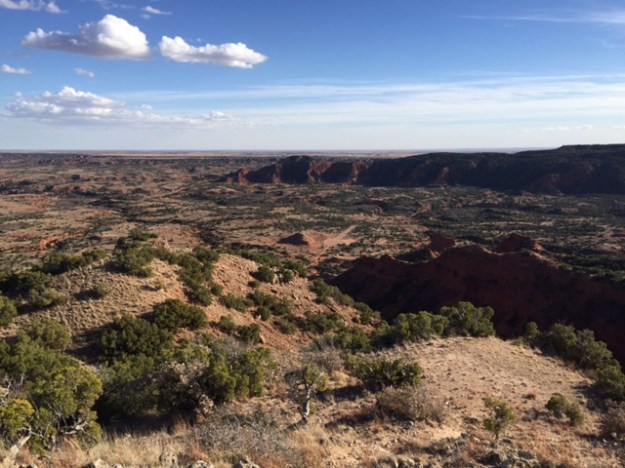 From the Annals of the Conquistadors – In 1540, the Spanish Viceroy of Mexico, Antonio de Mendoza, commissioned Francisco Vázquez de Coronado to lead an expedition to search for the Seven Cities of Cíbola. The Spanish were intrigued by the report of Álvar Núñez Cabeza de Vaca who had described the cities after finding his way back to New Spain following his long wandering through Texas, New Mexico and northern Mexico. Another explorer, Marcos de Niza, later confirmed Cabeza de Vaca’s report. Coronado and 1,000 men set out from Culiacan April of 1540 and he did not return for more than two years. He found Cíbola – but they were the Pueblos of western New Mexico and there was no gold. Undaunted, he was induced by the captive El Turco to search for gold in Quivira located somewhere in present day Kansas. Quivira turned out to be a village of the Plains Indians eking out a subsistence living. in his wanderings, Coronado did explore the Llano Estacado in the Panhandle and Eastern New Mexico and “discovered” Palo Duro Canyon and the Caprock in West Texas.