Category Archives: Today in Texas History

Today in Texas History – June 17

From the Annals of Song and Dance – In 1965, the Texas Panhandle Heritage Foundation opened the show “Thundering Sounds of the West” in an outdoor amphitheater in Palo Duro Canyon State Park. The show ran until September 6, 1965. The success of the show led to the first annual presentation of the musical Texas in 1966.  Texas has been performed annually ever since in the Pioneer Amphitheatre.   The show runs from the first weekend in June until mid-August  every summer.

Today in Texas History – June 16

La Reunion August 2010 #1 photo DSC01820.jpg

From the Annals of the Utopians –  In 1855, 200 or so French, Belgian and Swiss immigrants arrived at La Réunion. The colony was located on the south bank of the Trinity River in Dallas County and was planned as a utopian socialist community. Victor Prosper Considerant was the founder of the colony and a French democratic socialist who directed an international movement based on Fourierism, a set of economic, political, and social beliefs advocated by French philosopher  François Marie Charles Fourier.  La Réunion was short-lived and disbanded due to financial troubles, bad weather, failed crops and rising costs.  On January 28, 1857, Allyre Bureau, one of the society leaders, gave formal notice of the colony’s dissolution.  By 1860, the site was incorporated into Dallas.  The colony’s name survives in the Reunion District of Dallas highlighted by the Reunion Tower.

Photo from texasghostowns.blogspot.com

Today in Texas History – June 13

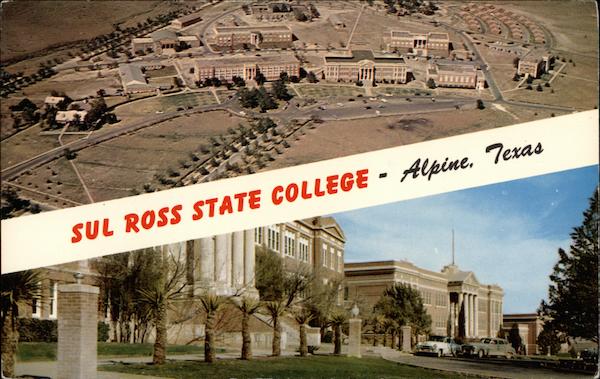
From the Annals of Higher Education –  In 1920, Sul Ross State Normal College began operations. The school which is located in Alpine is now known as Sul Ross State University.  The school is named for Lawrence Sullivan Ross a Texas Governor and Confederate General.  SRSU became the cultural and educational center for remote Big Bend region of Texas.  A major draw is the Museum of the Big Bend which serves as a depository for materials which depict the multicultural society and history of the Big Bend region.  The Archives of the Big Bend in the Bryan Wildenthal Memorial Library collects documents reflecting the history and culture of the region.  SRSU offer 41 undergraduate and 27 graduate degree programs and has an enrollment of around 2000 students.

Today in Texas History – June 10

From the Annals of Extracurricular Activities –  In 1940, 108 boys participated in the first annual Lone Star Boys’ State program. The program provides teenage boys with training in functional aspects of citizenship and teaches constructive attitudes toward the American form of government. Nationally the program was begun in the 1930s to counter Fascist-inspired Young Pioneer Freedom camps. Participants are grouped into mock cities, form a mock state government, and elect state officers. The program is held each summer, usually in June, at the University of Texas at Austin. Two boys are chosen to attend Boys’ Nation in Washington, D.C., each July.

Today in Texas History – June 3

From the Annals of Space –  In 1965, Astronaut Ed White of San Antonio became the first American to take a stroll in space.  The so-called “space walk” occurred during the Gemini 4 mission.  The extra-vehicular activity (according to NASA jargon) started on the third orbit when White opened the capsule’s hatch and used the hand-held manuevering oxygen-jet gun to push himself out into space. The EVA started over the Pacific Ocean near Hawaii and lasted 23 minutes, ending over the Gulf of Mexico. Initially, White propelled himself to the end of the 8 meter tether and back to the spacecraft three times using the hand-held gun. After the first three minutes the fuel ran out and White manuevered by twisting his body and pulling on the tether.

Photo from NASA archives.

Today in Texas History – June 2

From the Annals of Prohibition –   In 1911, prohibitionists mourned the death of  Carry Nation.  Nation was born in Kentucky in 1846, but lived in Texas for several years as a child in the 1860s and from 1879 to 1889. While in Texas, Nation claimed to have had numerous mystic experiences and ultimately came to believe that she had been selected by God and that she spoke through divine inspiration.  Her husband, a reporter for the Houston Post, ran afoul of the feuding sides in the Jaybird-Woodpecker War, and the couple relocated to Kansas. In 1892 she helped organize a local chapter of the Woman’s Christian Temperance Union and was appointed jail evangelist. She began a crusade against alcohol and tobacco that lasted until her disability and death.  She became famous as the hatchet-wielding illegal “joint” wrecker  and berated persons who sold liquor. The sale of souvenir hatchets and earnings from nationwide lecture tours allowed her to pay the fines that resulted from more than thirty arrests. Although she was a national leader of the extremist element of the prohibitionist movement, she never had the unqualified support of the WCTU or of any other national organization.

Today in Texas History – June 1

From the Annals of the State Parks –  in 1969, the Lyndon B. Johnson State Historical Park opened to the public.  The state park is directly across the Pedernales River from the LBJ National Historical Park which encompasses much of the LBJ Ranch.  The two parks operate largely in tandem and feature numerous sites including the family cemetery where LBJ and Lady Bird are laid to rest.

Today in Texas History – May 31

From the Annals of the Frontier –  In 1881, Capt. J. B. Irvine closed Fort Griffin and marched the only remaining unit, Company A, 22nd Infantry to Fort Clark near present day Bracketville.  Fort Griffin, located just north of Albany in Shackelford County was instrumental in the campaign against the Comanche, Kiowa and their allies.   The post was established in 1867 on the Clear Fork of the Brazos River.  The fort became the centerpiece of the border-defense line from Fort Richardson at Jacksboro to the Big Bend country. By 1879 the southern buffalo herd was depleted, and the fort and its outposts were within a settled area.

The history of the fort (sort of) and the settlement of Albany and environs is celebrated each weekend June at the Fort Griffin Fandangle.

Today in Texas History – May 27

From the Annals of Rock and Roll –  In 1957, Buddy Holly’s band, the Crickets, released their first single, “That’ll Be the Day” on Brunswick Records.   The song was written by song written by Buddy Holly and Jerry Allison.  It has been recorded by various other artists including notably Linda Ronstadt and it was the first song to be recorded by the Quarrymen.  The catch line of the song came from a visit to the cinema by Holly, Allison and Sonny Curtis to see “The Searchers.”  Holly liked John Wayne’s oft repeated phrase “that’ll be the day.”  The song was a major hit and propelled the band into national prominence.  It is listed as number 39 on Billboard’s 500 all time greatest rock and roll records.

Today in Texas History – May 20

From the Annals of the Rockers –   In 1978, “The Buddy Holly Story” premiered in Lubbock the home town of Buddy Holly and the Crickets.  The film starred Gary Busey as Buddy Holly and chronicled his meteoric rise to stardom, courtship and marriage and untimely death.  The film received excellent reviews and was a commercial success as well.