Category Archives: Today in Texas History

Today in Texas History – April 18

From the Annals of the Tejanos – In 1842, Juan Seguín resigned as Mayor of San Antonio due to threats on his life.   He was falsely accused of aiding the Mexican army and discrimination against Texans of Mexican origin – even those who served in the revolution –  became too oppressive.  He fled to Mexico to “seek refuge amongst my enemies,” where he was captured, arrested and coerced to enlist in the Mexican army as a staff officer. He returned to San Antonio with the opposition army of Adrian Woll  in September 1842 and in a cruel twist of fate later served under Santa Anna in the Mexican-American War of 1846–1848.

In February 1848, Seguín requested permission to return to Texas and eventually  established a home adjacent to his father’s house and began ranching in Floresville.  He also returned to political life and was elected to two terms as Justice of the Peace of Bexar County and later County Judge of Wilson County. In 1883 he settled in Nuevo Laredo, Tamaulipas to be near his son Santiago, who was mayor. He died there on August 27, 1890. His remains were returned to Texas in 1974 and as part of the nation’s Bicentennial celebration were reinterred in Seguin during ceremonies on July 4, 1976.

Today in Texas History – April 15

From the Annals of the French –  In keeping with this week’s museum theme, in 1956, the restored French Legation was opened to the public.  The site is in East Austin adjacent to the Texas State Cemetery.   France was the only country other than the United States to recognize the Republic of Texas.  France sent Jean Pierre Isidore Alphonse Dubois, from the French Legation in Washington, to be the chargé d’affaires  in Texas.  Dubois was instructed to to remain in Austin to maintain an official presence there.  The legation building was completed in 1840-1841, and probably was the finest structure in Austin at the time. Dubois entertained dignitaries (such as were available) and worked with the government to bring French settlers to Texas.  After the capital was temporarily moved from Austin, the legation was abandoned. It was then occupied by the Catholic Bishop of the Diocese  Galveston.  Dr. Joseph W. Robertson later bought the estate where he and descendants lived 1940. In 1945, the State purchased the site and gave custody to the Daughters of the Republic of Texas who established the French Legation Museum in 1949. The DRT restored the legation building and grounds and opened the site to the public on this date in 1956.  It is the oldest house in Austin.

Today in Texas History – April 14

From the Annals of the Museums–   In 1933, the Panhandle-Plains Historical Museum opened in Canyon.  The PPHM claims to be the first state museum in Texas.   The museum first began to take shape when an educator named Hattie Anderson moved to Canyon to teach history at West Texas State Normal College.  She saw an opportunity to preserve the quickly vanishing history of the Llano Estacado.  By early 1921, Anderson and L.F. Sheffy (the head of the college’s history department) joined seven other faculty members and around thirty students to organize the Panhandle-Plains Historical Society.  Together they began to collect and preserve the human and natural history of the region. They began soliciting support for their efforts, in the form of society memberships.  By 1932, the group had enough funds to begin construction of Pioneer Hall still the main building for the museum.  The Art Deco limestone structure features fine decorative stonework and, on its façade, carvings and bas reliefs depicting Western themes as well as Panhandle-Plains flora and fauna. More than 75 famous West Texas cattle brands surround the entrance.

Red personally recommends the PPHM as the best historical museum in the State.  A must see if you visit Canyon and expect to spend at least a couple of hours touring the excellent exhibits.

Today in Texas History – April 13

From the Annals of Classical Piano –  In 1958, Van Cliburn won the first Tchaikovsky International Piano Contest in Moscow – a competition designed to promote Russian cultural superiority.  The victory propelled him to fame as the “Texan Who Conquered Russia” according to a Time magazine cover.  Cliburn was born in Shreveport, Louisiana but moved with his family to Kilgore in first grade.  His mother, a piano teacher, discovered his talent at a young age and Cliburn made his debut with the Houston Symphony Orchestra at age 12.  At 17, he began his studies at Julliard School in New York and was a rising star, but it was his win in Moscow at age 23 that made him an international phenomenon.

Max Frankel, the New York Times’ Moscow correspondent, heard that Russian audiences at the competition that were wildly enthusiastic about the pianist known as “Cleeburn.” As Frankel related in a 2008 interview, the young and handsome Cliburn was popular in Moscow “especially the young girls were going absolutely crazy about Van’s performances, heaping flowers on him, And there were long lines to get in, even longer than usual.” Frankel consulted, Mark Schubart, dean of the Juilliard School wondering if Cliburn was really “phenomenal, or is this just another case of Frank Sinatra bobby-soxers?” Schubart confirmed that Van Cliburn was “a hell of a musician”  and “well in line to win this thing if the Russians ever let him.”

And win is what he did, wowing audiences and the jurors by playing works by the Russians’ best-loved composers, Rachmaninoff and Tchaikovsky.  The award had to be blessed by  Soviet Premier Nikita Khrushchev, who could not deny Cliburn’s victory and even eventually  befriended the talented Texan.

Today in Texas History – April 12

From the Annals of Fine Art –   In 1924, the Houston  Museum of Fine Arts opened to the public. The MFA claims to be the oldest art museum in the state of Texas.  That claim is disputed by the Fort Worth Museum of Modern Art.  The museum site was dedicated in 1917 by the Houston Public School Art League (later the Houston Art League) with the intention of becoming a public art museum. The original neo-classical building was designed in phases by architect William Ward Watkin. The original Caroline Wiess Law building was opened in 1924 and the east and west wing were added in 1926. The museum has continually expanded over the years with the addition of the Robert Lee Blaffer Memorial Wing in 1953, Cullinan Hall in 1958 and the Brown Pavilion in 1974.  The Brown Pavilion is the only Mies van der Rohe museum building in the U.S.  IN 2000, the MFA expanded dramatically with the addition of the Audrey Jones Beck Building which added 158,000 feet of exhibition space for major traveling exhibits.

Today in Texas History – April 11

From the Annals of the Rivers –  In 1838, the keelboat David Crockett, arrived at the head of the raft on the Colorado River.  The “raft” was an enormous logjam caused by the river’s slow current and meandering course.   By the late 1830s, the raft blocked the river ten miles above its mouth at Matagorda. The Crockett, reputed to be the largest craft to attempt to navigate the Colorado, had averaged more than sixty miles a day, but was forced to stop  at the head of the raft, where its cargo of cotton was unloaded and carried by wagon to Matagorda.  Incredibly, the raft remained in place until the 1920s.  Removal of the log jam  caused the development of an enormous delta that reached across Matagorda Bay to the Matagorda Peninsula. In 1936 engineers dug a channel through the delta, but Matagorda gradually became landlocked.

Today in Texas History – April 8

From the Annals of the National Treasures –   In 1968, Lady Bird Johnson dedicated Padre Island National Seashore.  Padre Island is the largest barrier island in the U.S. and  PINS is the longest seashore in the national park system.  Protecting this precious resource was not easy.  Texas attempted to establish a state park on Padre Island beginning in 1936.  The effort failed in a contentious struggle between public and private interests over ownership of the land. In 1958, Sen. Ralph Yarborough (D-Texas)  introduced a bill to establish a national park on the island, and the proposal was finally signed into law in 1962. The dedication of the park followed five years of condemnation proceedings.

Today in Texas History – April 7

From the Annals of the Empresarios –  In 1825, Green DeWitt successfully petitioned the Mexican government to settle a colony of “four hundred industrious Catholic families” in Texas between the Lavaca and Guadalupe Rivers.  DeWitt’s Colony was less successful than Austin’s never reaching the maximum allowed number of families before the contract expired.  By 1830, the total population was only 377. The areas of settlement were primarily along the Guadalupe and San Marcos rivers, but also on the tributaries of the Lavaca River.  DeWitt did manage to reach the required minimum of 100 families, and his colonists were allowed to receive land titles.  DeWitt appointed Jose Antonio Navarro as land commissioner.  The land was surveyed by Byrd Lockhart and in 1831 and 1832, 189 titles were issued.

Today in Texas History – April 6

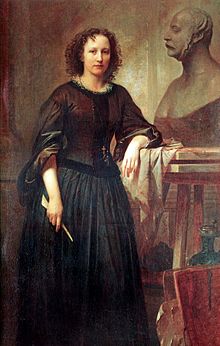
Elisabeth Ney by Friedrich Kaulbach.jpg

From the Annals of the Artists –  In 1911, the Elisabet Ney Museum was founded in Austin. It served as one of the earliest centers for artistic development in Texas.  The German-born Ney spent the first half of her life in Europe before emigrating to the U.S. at the age of 39 with her husband Edmund Montgomery.  The first settled in Georgia before coming to Texas where Montgomery purchased Liendo Plantation near Hempstead.  Ney ran the plantation while Montgomery tended to his studies.  In the early 1880’s, Ney was invited to Austin by Gov. Oran Roberts.  She purchase land in Hyde Park and built a new studio named Formosa.  She revitalized her artistic career in Austin creating her most famous works – statutes of Stephen F. Austin and Sam Houston for the Chicago World’s fair and the memorial to Albert Sydney Johnson in the Texas State Cemetery.  The museum which bears her named is located on the site of her studio in Hyde Park.

Today in Texas History – April 5

From the Annals of the Gunslingers –  In 1896, U.S. deputy marshal George A. Scarborough shot John Selman in El Paso.  Selman was a notorious gunman and gambler. Selman was perhaps best known as the man who killed John Wesley Hardin in 1895.  Selman, as Constable of El Paso, had also shot and killed former Texas Ranger Bass Outlaw on April 5, 1894 after Outlaw killed Texas Ranger Joe McKirdict.  Outlaw had been a close friend to Scarborough.  Selman was tried for the shooting and found not guilty.  On the second anniversary of Outlaw’s death, Scarborough called out Selman into the alley behind the Wigwam Saloon.   An argument ensued followed by a fight.  Scarborough claimed both drew their guns, and that he then fatally shot Selman. Selman died the next day. No gun was found on Selman’s body.  Scarborough was indicted for murder.  Conveniently before the trial, a thief was arrested who claimed to have stolen Selman’s gun immediately after the supposed gun fight. Scarborough was acquitted but was forced to resign his position as deputy marshal.    April 5 was an auspicious day for Scarborough. As with many of his ilk, he died at the end of a muzzle.  He died at his home in Deming, New Mexico on April 5, 1900 following a gun fight with cattle rustlers in Arizona.

Photo of U.S. Marshall George Scarborough from murderpedia.org