Tag Archives: Texas History

Today in Texas History – January 26

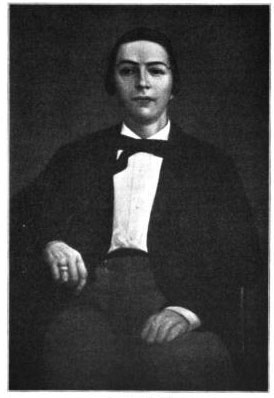
From the Annals of Crockery –  In 1893, the new McDade Pottery plant produced its first wares. The McDade plant was the successor to a “jug shop” begun in 1853 near present-day Bastrop State Park.  The plant moved to McDade in the late 1870s. Robert L. Williams, an experience ceramicist, recognized the potential for McDade clay, bought the business in 1890. He built a new plant with two brick beehive kilns, clay-grinding equipment, and a railroad siding. He continued production of garden pottery, specialty items and kitchen ware. Williams invented an extrusion press with assorted sizes of dies for the rapid production of flowerpots and other hollowware. The business flourished until Williams’ death in 1924.  By the forties mass produced plastic ware and other developments led to the demise of the pottery business.

Photo of early McDade potters from the McDade Historical Museum.

Today in Texas History – January 25

From the Annals of Heraldry –  In 1839, the Congress of the Republic of Texas adopted the Texas coat of arms.  The herald is a circular shield with a white five-pointed star on an azure ground surrounded by olive and live oak branches.  Upon statehood in 1845, the designation was altered from the Republic of Texas to the State of Texas.

Red understands the live oak branch and realizes that some now claim to make Texas olive oil, but it seems like a strange choice at the time.

Today in Texas History – January 22

From the Annals of the Presidency –  In 1973, former President Lyndon Baines Johnson passed away in Johnson City at the age of 64.  After deciding to not stand for re-election, LBJ went back his ranch in Central Texas.  According to many, LBJ worked as hard at ranching as he had as a politician.  The presidential biographer, Doris Kearns, observed Johnson working on the ranch with the same level of intensity he had tackled work in the Oval Office. Each morning, Johnson would instruct his ranch hands to make a “solemn pledge that you will not go to bed tonight until you are sure that every steer has everything he needs. We’ve got a chance of producing some of the finest beef in this country if we work at it.  And if we treat those hens with loving care we should be able to produce the finest eggs in the country.” He ordered daily reports on the production of eggs. To Kearns, Johnson’s frustration with his hens’ egg production echoed the frustration he experienced in failing to conclude an un-winnable war in Vietnam.

The ranch work could not conceal the fact that LBJ was, in his own words, miserable.  His legacy of accomplishment as the creator of a “Great Society” and in passing the landmark Civil Rights Act of 1964 was being overshadowed by the floundering war in Vietnam and the anti-war movement.

On the day of Richard M. Nixon’s inauguration, Johnson watched sullenly as Nixon announced the dismantling of many of Johnson’s Great Society social programs.  The next day, Nixon announced that he had achieved the ceasefire in Vietnam that had eluded Johnson. Johnson had reportedly predicted that he would die if his vision of the Great Society died. The following day, while Lady Bird and their daughters were in Austin, Johnson suffered a fatal heart attack.  He is buried in a family cemetery at the ranch.  One can only imagine what he would think about the likes of Trump and Cruz.

Photo from the LBJ Library

Today in Texas History – January 20

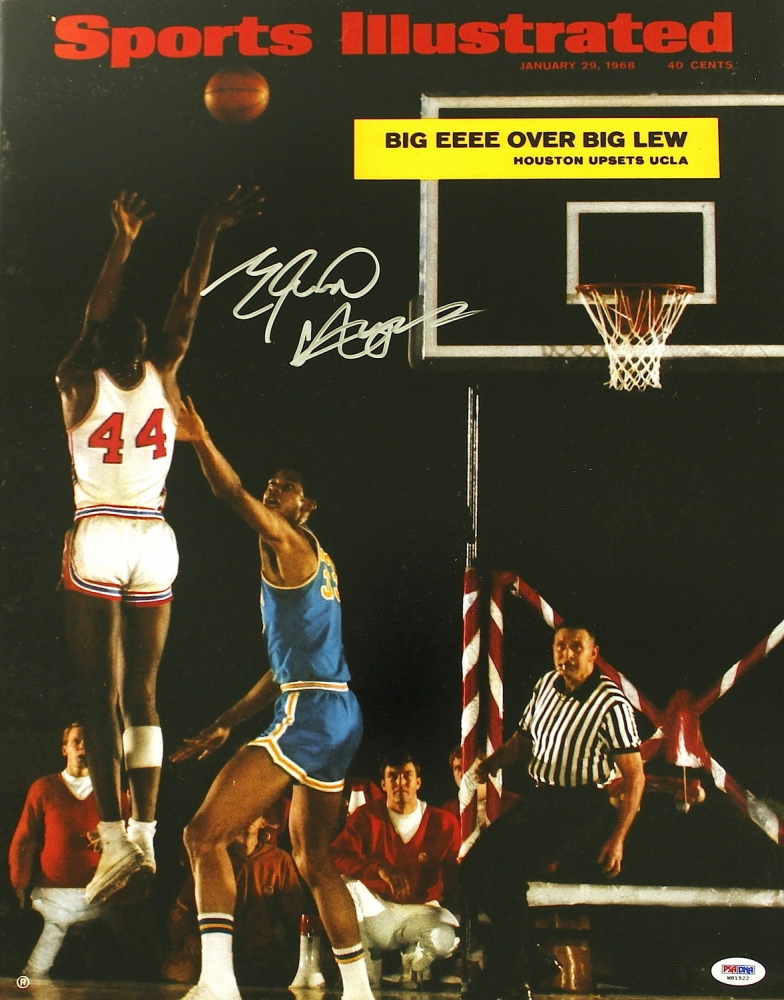
From the Annals of Roundball – In 1968, Houston ended UCLA’s 47-game winning streak with a 71-69 victory at the Astrodome before 52,693 fans. The so-called “Game of the Century” was the first basketball game played in the Eighth Wonder of the World and set a NCAA attendance record. It was also the first NCAA regular season game broadcast nationwide in prime time through a syndication package.

Houston and UCLA had met the previous season in the semifinals of the 1967 tournament with the Bruins winning 73–58 and moving on to win the national championship for the third time in four years.  Houston Coach Guy Lewis wanted a rematch and sold the game to UCLA’s John Wooden as something that would be good for all of college basketball.

The biggest match-up of the game featured Center Kareem Abdul-Jabbar (then Lew Alcindor) for the Bruins against Forward Elvin Hayes of the Cougars.  Although they did not play directly against each other, Hayes did block 3 of KAJ’s shots bringing cries of “E” from the crowd.  KAJ had suffered an eye injury the week before and turned in the worst performance of his college career.  The two teams would meet again in the NCAA tournament semi-final.  UCLA exacted revenge stomping the Cougars 101 to 69 and going on to beat North Carolina in the final.

Sports Illustrated cover from Pristine Auctions.

Today in Texas History – January 14

From the Annals of the Constitution –  In 1860, the U.S. House of Representatives’ Committee of Thirty-Three submitted a proposed constitutional amendment protecting slavery in all areas where it already existed. The proposed amendment was intended to stop states from seceding.   Following the election of Abraham Lincoln, the secession fury picked up in the South.  The Republican Party was committed to restricting slavery in the Western territories, and Southerners were dead set on protecting their right to own other human beings.  The House of Representatives appointed the Committee of Thirty-Three, consisting of one member from each state, to investigate avenues of compromise that would keep the South from seceding.

Most of the floated plans involved an expansion of slavery into the Western territories, but that fight was what had killed off the Whigs and given rise to the Republican party, and Northern states were opposed to any further slave states entering the Union.  The only plan to make it out of the committee was submitted by Thomas Corwin of Ohio and called for an amendment to protect slavery, enforce the fugitive slave laws, and repeal state personal liberty laws.  The South was increasingly concerned faced with numbers of slaves escaping to the North and the personal liberty laws made it difficult to return persons to the condition of chattel slavery.  South Carolina, Florida, Mississippi, and Alabama had already seceded by the time Corwin made his proposal. The plan went no where and the issue of slavery was only resolved with a long and bloody civil war.

And this is why floating absurd plans to amend the Constitution to fundamentally alter our federal system are a stupid idea Governor Abbott.

Today in Texas History – January 8

From the Annals of the Civil War – In 1864, the Boy Martyr of the Confederacy was hanged in Little Rock, Arkansas.  David Owen Dodd, a native of Victoria then living in Arkansas, had carried some letters to business associates of his father in Union held Little Rock.  He obtained a pass to return to his family in Camden, but a guard destroyed it when he  entered Confederate held ground.  After spending the night with his uncle, he wandered back into Union territory.  Union soldiers determined that he did not have a pass and upon a search found that he was carrying a notebook with Morse code annotations describing the location and strength of Union troops. He was arrested and tried by a military tribunal.  Dodd represented by attorneys T.D.W. Yonley and William Fishback, who was pro-Union and later became Governor of Arkansas. The defense consisted mostly of a plea for amnesty, which was rejected by the tribunal. Dodd was found guilty of spying and sentenced to death.  His hanging before a crowd estimated at 5000 was reportedly botched likely resulting in a slow death.  At the time, Union sympathies were strong in Arkansas and a constitutional convention was in session to enable the state to rejoin the Union.  Dodd’s execution renewed tensions between Union and Confederate factions. Dodd quickly became a folk hero and a force behind renewed support for the Confederacy.

Today in Texas History – January 6

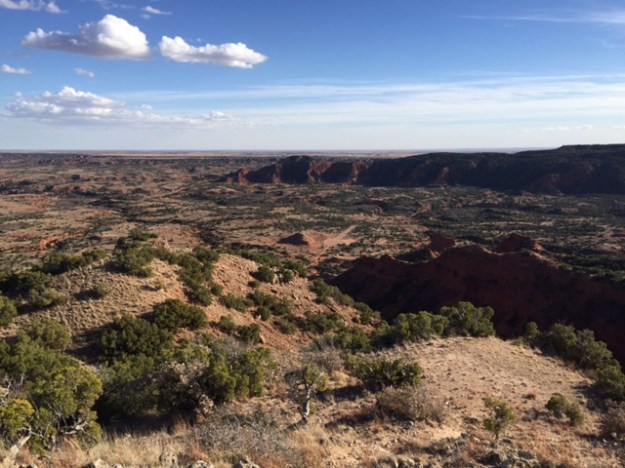
Caprock CSP 1From the Annals of the Conquistadors – In 1540, the Spanish Viceroy of Mexico, Antonio de Mendoza, commissioned Francisco Vázquez de Coronado to lead an expedition to search for the Seven Cities of Cíbola. The Spanish were intrigued by the report of Álvar Núñez Cabeza de Vaca who had described the cities after finding his way back to New Spain following his long wandering through Texas, New Mexico and northern Mexico.  Another explorer, Marcos de Niza, later confirmed Cabeza de Vaca’s report. Coronado and 1,000 men set out from Culiacan April of 1540 and he did not return for more than two years.  He found Cíbola – but they were the Pueblos of western New Mexico and there was no gold.  Undaunted, he was induced by the captive El Turco to search for gold in Quivira located somewhere in present day Kansas.  Quivira turned out to be a village of the Plains Indians eking out a subsistence living.  in his wanderings, Coronado did explore the Llano Estacado in the Panhandle and Eastern New Mexico and “discovered” Palo Duro Canyon and the Caprock in West Texas.
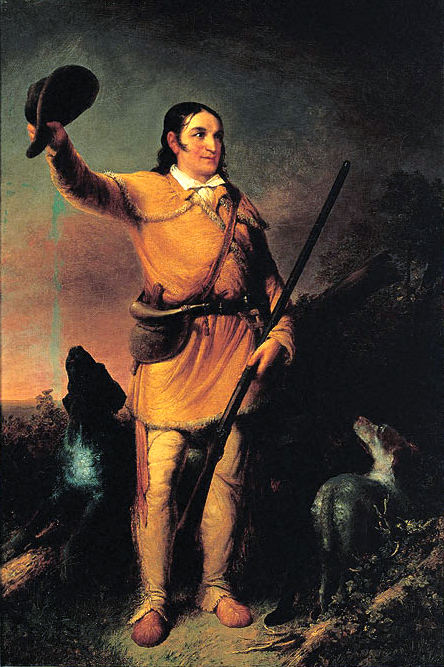
Photo from the top of the Caprock in Caprock Canyon State Park.

Today in Texas History – January 5

From the Annals of the Revolution – In 1836, David Crockett arrived in Texas.  At the time, he was one of the most famous men in America.  In 1834, the newly formed Whig Party had seriously considered Rep. Crockett of Tennessee for its presidential candidate.  Crockett was a folk hero based on his backwoods origins, but he was also a reasonable shrewd politician who played up his popular image in winning a seat in Congress representing west Tennessee. He had pushed for land reform that would have benefitted his landless Tennessee constituents and refused to kowtow to Pres. Andrew Jackson.  He strongly opposed the president’s Indian Removal Bill.  But after suffering a last electoral defeat, he apparently realized that he could not compete with the powerful Jackson.  When he lost his congressional seat in 1835 he was at a low point.  Heavily in debt and estranged from his wife, he embarked on the trip to Texas undoubtedly hoping to revive his sagging political fortunes.  He was well received in Texas and likely would have been a political force in the Republic had he survived the Revolution.  “I told the people of my District, that, if they saw fit to re-elect me, I would serve them as faithfully as I had done,but, if not, they might to go to hell, and I would go to Texas.”

30,000 Dead Dairy Cows

Winter storm Goliath wreaked havoc with transportation in the days after Christmas, but its after-effects are now being felt.  Texas and New Mexico dairy farmers estimate that 30,000 head were lost in the blizzard that covered much of Eastern New Mexico and the Texas Panhandle.  Texas Association of Dairymen executive director Darren Turley said an estimated 15,000 mature dairy cows died from the storm.  The impact area contains ten counties that account for almost  40% of the state’s milk production.

Of course that means less dairy production and possibly higher milk prices in the immediate future, but disposal is a real problem right now. Texas dairy producers are working with state environmental officials to find ways to dispose of the mass numbers of dead animals. Some counties are allowing producers to put carcasses in their landfills.

Today in Texas History – December 29

From the Annals of Statehood –  In 1845, Texas was admitted to the United States as the 28th state after the “Joint Resolution for the Admission of the State of Texas into the Union” went into effect. The Republic of Texas had lasted nine years and goes down in history among the shorter-lived experiments in representative democracy.