Category Archives: Today in Texas History

Today in Texas History – September 19

From the Annals of the Pioneer Women – In 1821, Jane Long said goodbye to her husband James Long at Fort Las Casas on the Bolivar Peninsula.  James was travelling to La Bahía as part of his mission to overthrow of the Mexican government.  He never reached La Bahia and was captured at San Antonio de Bexar and taken to Mexico City.  He never returned to Texas and died in prison in Mexico.  Jane sought a pension from Governor José Félix Trespalacios, a friend of her husband.  Denied any compensation, Long opened a boarding house in Brazoria which she operated for several years before moving to her land grant in the Austin colony. In Richmond, she opened another boarding house and built a plantation both of which were successful.  The Civil War, however, reversed her fortunes and after the war she was dependent on her children and grandchildren.  Often referred to as the “Mother of Texas”, Long claimed to be the first English-speaking woman to bear a child in Texas.  The title stuck even though her claim was inaccurate.  Numerous Texas landmarks bear her name today.

Today in Texas History – September 15

From the Annals of the Abolitionists –  In 1829, Mexican President Vicente R. Guerrero issued the Guerrero Decree which abolished slavery throughout the Republic of Mexico except the Isthmus of Tehuantepec.  This was a major spark for the Texas Revolution as many Anglo settlers had brought slaves with them and were opposed to abolition.  The role of the preservation of slavery as a cause of the revolution has been understated in Texas history for as long as Red can remember. It was far from the only cause, but there were approximately 5000 enslaved persons out of a total of about 38,000 people (not including Native Americans) living in Texas at the time of the revolution.  After winning independence, the Constitution of the Republic of Texas of 1836 provided:

All persons of color who were slaves for life previous to their emigration to Texas, and who are now held in bondage, shall remain in the like state of servitude…  Congress shall pass no laws to prohibit emigrants from bringing their slaves into the republic with them, and holding them by the same tenure by which such slaves were held in the United States; nor shall congress have the power to emancipate slaves; nor shall any slave holder be allowed to emancipate his or her slave without the consent of congress, unless he or she shall send his or her slave or slaves without the limits of the republic.

Today in Texas History – September 14

From the Annals of the Authors –  In 1964, J. Frank Dobie received the Medal of Freedom from President Lyndon B. Johnson.  Dobie is most famous for his retelling of Texas folklore and vignettes of Texas history.  Born in Live Oak County on a ranch, Dobie went to school in Alice and later studied at Southwestern University in Georgetown and Columbia in New York.  He worked as a reporter, school teacher, professor and ranch manager.  While at the University of Texas, he joined the Texas Folklore Society which became a lifelong calling.  In 1929, JFD published his first book A Vaquero of the Brush Country – based on his work on his uncle’s ranch in South Texas.   The book established him as a spokesman for Texas folklore and culture of the no-longer open range.  His other books focused on similar Texas and Native American themes and included On the Open Range (1931), Tales of the Mustang (1936), The Flavor of Texas (1936), Apache Gold and Yaqui Silver (1939), and Tongues of the Monte (1947).  He is remembered mostly today for the Dobie Paisano Ranch on Barton Creek near Austin (owned by UT) which provides authors with a fellowship and a place to write.  Dobie died 4 days after receiving the award. Sadly, his books are read by almost no one anymore.

Today in Texas History – September 13

From the Annals of the Flyboys –  In 1935, aviator Howard Hughes, Jr., originally of Houston, set a new landplane airspeed record of 352.39 mph in the Hughes H-1 airplane.  The H-1Racer was specifically designed for speed records.. It was the first aircraft model produced by the Hughes Aircraft company and only one was ever built.  It was also the last aircraft built by a private individual to set a world speed record.  All aircraft speed records since then have been broken by military craft.

The H-1 broke the world landplane speed record with Hughes at the controls, clocking 352.39 mph  averaged over four timed passes. Hughes ran out of fuel after the last pass, but managed to land in a beet field south of Santa Ana, California without serious damage to either himself or the plane.  After exiting the plane, Hughes only recorded comment was: “We can fix her; she’ll go faster.”

Today in Texas History – September 11

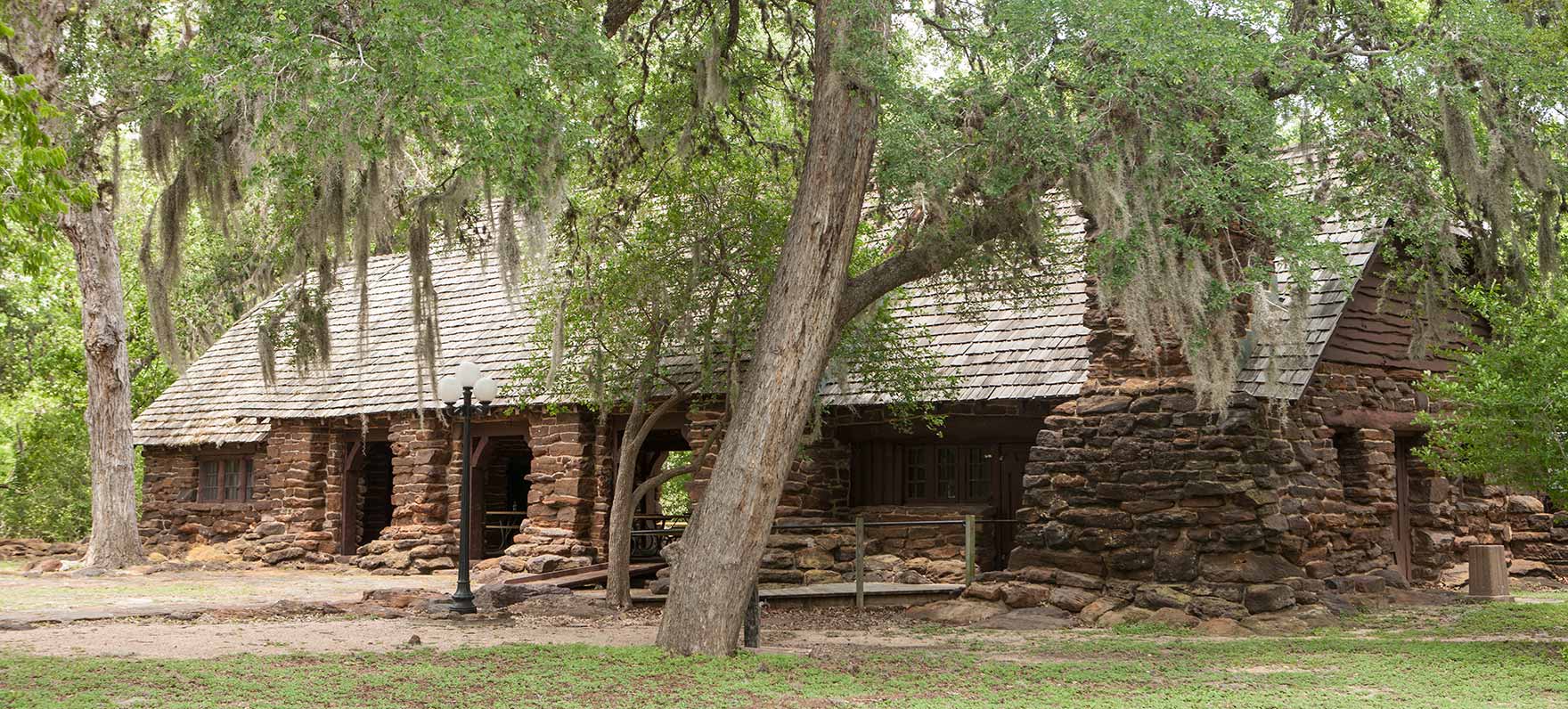
From the Annals of the Parks – In `933, the Texas State Parks Board acquired 198 acres of the Ottine Swamp in Gonzales County from the City of Gonzales, the Texas & New Orleans Railroad and several private land owners.  The land was designated as Palmetto State Park which opened in 1936.  The park was constructed by Civilian Conservation Corps (CCC) between 1934 and 1937. The CCC built Park Road 11, a low water crossing on the San Marcos River, a water tower/storage building, refectory, and residence (currently the park headquarters), barbeque pits, picnic seating, rock pool and retention dams, rock table, culverts, concrete picnic tables, and two sets of entrance portals.  The park is home to numerous plant and animal species that are not found typically found in the region.

Today in Texas History – September 6

From the Annals of the Racists –  In 1888,  the Jaybirds, a whites-only political association, met in Richmond and ordered Charles Ferguson and several other black political leaders to leave Fort Bend County within ten hours. The Jaybirds represented the resentful white population (all Democrats) who were still smarting over the Republican government that controlled the county during Reconstruction.  The  competing faction was the Woodpeckers who were nominally Democrats but held office as a result of Republican and black voters.   The Woodpeckers had controlled the county for about 20 years.  The so-called Jaybird-Woodpecker War was fight between these two factions for control of Fort Bend County.  The Jaybirds met in Richmond and “expelled” a number of Woodpecker leaders.

The Woodpeckers won the election despite the expulsion, and the violence continued.  In the spring of 1889, Tax Assesstor Kyle Terry, a Woodpecker, murdered Ned Gibson, a leader of the Jaybirds who was set to testify against one of Terry’s friends in an unrelated cattle-rustling trial. Terry was arrested but posted bail and decamped to Galveston where he was later killed by the Jaybirds.  The cycle of violence continued culminating in the Battle of Richmond, on August 16, 1889, when Woodpecker Sheriff Garvey was killed.  After that, the Woodpeckers were driven from office.

The Jaybirds had a long-lasting influence mostly through the creation of the “Whites Only” Democratic primary system in Fort Bend County which effectively ended any political strength for black voters.  The system was so successful that the Legislature adopted a similar Whites Only primary measure which ensured that the Jaybird Democrats would retain control.  The blatantly unconstitutional and discriminatory practice continued until it was overturned by the U.S. Supreme Court in Terry v. Adams, 345 U.S. 461 (1953).

Today in Texas History – September 5

Image result for sam houston 1836

From the Annals of the Republic – In 1836, Sam Houston was elected as the first president of the Republic of Texas. Mirabeau B. Lamar was elected as vice president.  Houston defeated Stephen F. Austin and Henry Smith with 79% of the vote.  Austin was initially the front-runner in the race over Smith, who had been provisional governor and a delegate at Washington-on-the-Brazos when Texas declared its independence.  Despite his renown today, Austin was not widely known across Texas and his reputation had been sullied by connections to land speculator Samuel May Williams.  Houston did not declare his candidacy until eleven days before the election, but once he did, victory was all but inevitable. Houston was inaugurated on October 22, 1836, replacing interim president David G. Burnet.  After annexation, Houston would later serve as Texas’ senator and governor.  He was the only person to have been elected governor of two different U.S. states, as well as the only state governor to have been a foreign head of state.

Today in Texas History – September 1

From the Annals of the River Crossings –  In 1889, the Waco suspension bridge crossing the Brazos River opened for traffic as a free bridge.  The bridge had opened in 1870 as a toll bridge.  Until then no bridges spanned the Brazos in Texas and for 800 miles travelers had to look for low water crossings or ferries to move east and west through central Texas.  In 1866, the Texas Legislature granted a charter to the Waco Bridge Company giving the WBC a monopoly on transportation across the Brazos for 25 years and prohibiting other bridges to be built within five miles.  The WBC eventually settled on a steel cable suspension bridge design as affordable and practical for the intended use.   The WBC  engaged the John A. Roeblng Company, the firm which originated the suspension span bridge concept.  The WBC hired Thomas M. Griffith, Roebling’s chief engineer, as civil engineer for the project.  The Roebling Company was commisssioned to provide cables and bridgework. After Robeling died in 1869, his four sons inherited the company, which was renamed The John A Robeling’s Sons Company. Washington Robeling, most famous for building the Brooklyn Bridge, finished the Waco bridge which opened to paid traffic in 1870. At the time, it was the longest suspension bridge west of the Mississippi River.  The toll revenues quickly paid for the bridge.  Popular demand for a free bridge arose and McLennan County bought the Suspension Bridge from the WBC  for $75,000 and then sold it Waco for one dollar in an agreement that required the City to maintain the bridge and eliminate any tolls.  The bridge was open to vehicles until 1871 serving for more than 100 years.  Despite many mostly cosmetic renovations, the bridge has been restored to its original glory and is now the centerpiece of Indian Springs Park.


Today in Texas History – June 28

From the Annals of Democracy –  In 1919, the Texas Senate ratified the 19th Amendment which granted women the right to vote.  The amendment had been sent to the states for ratification earlier in June.  On June 23, the Texas House had ratified the amendment on June 23. Texas women had already achieved the right to vote in primaries in 1918 which was tantamount to voting in the general election in most parts of the state.  Texas was the first Southern state to ratify the amendment and the  ninth overall.  Woman suffrage had been considered in Texas as early as the Constitutional Convention of 1868.   After years of near dormancy, the Texas Equal Suffrage Association, a state chapter of the National American Woman Suffrage Association, led the fight for suffrage beginning in 1913.

Amazingly, Red knows several Neanderthals who still think women shouldn’t be voting. You can probably guess who they voted for in 2016.


Today in Texas History – June 8

From the Annals of the Hub – In 1969, Houston Intercontinental Airport opened.  HIA replaced Hobby Airport which continued to serve general aviation until the advent of Southwest Airlines which revitalized the subsidiary airport.   HIA had been envisioned since 1957, when the Civil Aeronautics Administration recommended a replacement for undersized and overcrowded Hobby Airport.  The project started in 1963 with plans for a massive $125 million facility about 10 miles north of downtown Houston.  The project was repeatedly delayed and its projected opening date was changed eight times.  The delays did not help improve the quality of the new airport and the overall incompetence of the design was quickly revealed.  Within 3 years, the it had become apparent that the terminals were inadequate for the amount of traffic, the runways were in disrepair, the terminal trams were pathetic and there was a shortage of parking space.  The problems resulted in the addition of a third terminal and other improvements.  The airport was later renamed for George Bush.

Red for one has always hated the place.  It is relatively convenient but very confusing, always too crowded, ugly and sprawling, and just a general pain in the ass for the traveler. It is great for getting your daily 10,000 steps in. Not to mention that it’s primary tenant is the lowly rated United Airlines.  If Red can fly out of Hobby that’s where he will be.