Category Archives: Today in Texas History

Today in Texas History – February 15

From the Annals of the People (or at least some of the People) –  In 1876, citizens of Texas (and by that Red means white men and some Hispanics) adopted the Constitution of 1876. The vote was 136,606 in favor with 56,652 against.  The 1876 Constitution was the sixth such document governing Texas since the declaration of  independence from Mexico in  1836.   The 1876 Constitution was primarily a reaction in connection with the reassertion of the Democratic Party (again white men) in the wake of Reconstruction.  It also incorporates some aspects of law from Spanish and Mexican rule, as well as protection for agriculture and debtors.  While calling for equal rights and due process on its face, those guarantees meant little to women and minorities at the time of adoption and for decades afterwards.  The 1876 Constitution has been repeatedly amended, but it remains the governing document of Texas to this day.


Today in Texas History – February 14

From the Annals of Coincidence –  In 1882, the town of Valentine in Jeff Davis County was founded when crews building the Southern Pacific Railway reached the outpost on St. Valentine’s Day.  Valentine is the only incorporated municipality in Jeff Davis County.  The town capitalizes on its name every year with the West Texas Valentine’s Day Celebration hosted by the Big Bend Brewing Company which draws upward of 1000 lovers some years.  The headliner this year will be Tejano legend Little Joe y la Familia.  The U.S. Post Office also does a landmark business cancelling letters and cards.

Photo of Valentine’s Day celebration in Valentine from thefusionmag.com


Today in Texas History – February 13

From the Annals of Aviation –   In 1943, the first class of military aerial navigators arrived at San Marcos Army Air Field.  Texas bases were widely used to train aviators during World War II.  More than 10,000 navigators were trained in San Marcos and elsewhere in Texas.  During the Korean War, SMAAF was the largest helicopter training base in the U.S. In 1953 the field was renamed Gary Air Force Base, in honor of 2d Lt. Arthur Edward Gary, the first San Marcos resident killed in World War II. The base was transferred to the army in 1956 and renamed Camp Gary. It was closed in 1963. The site is now used as the Gary Job Corps Center and San Marcos airport.

Today in Texas History – February 9

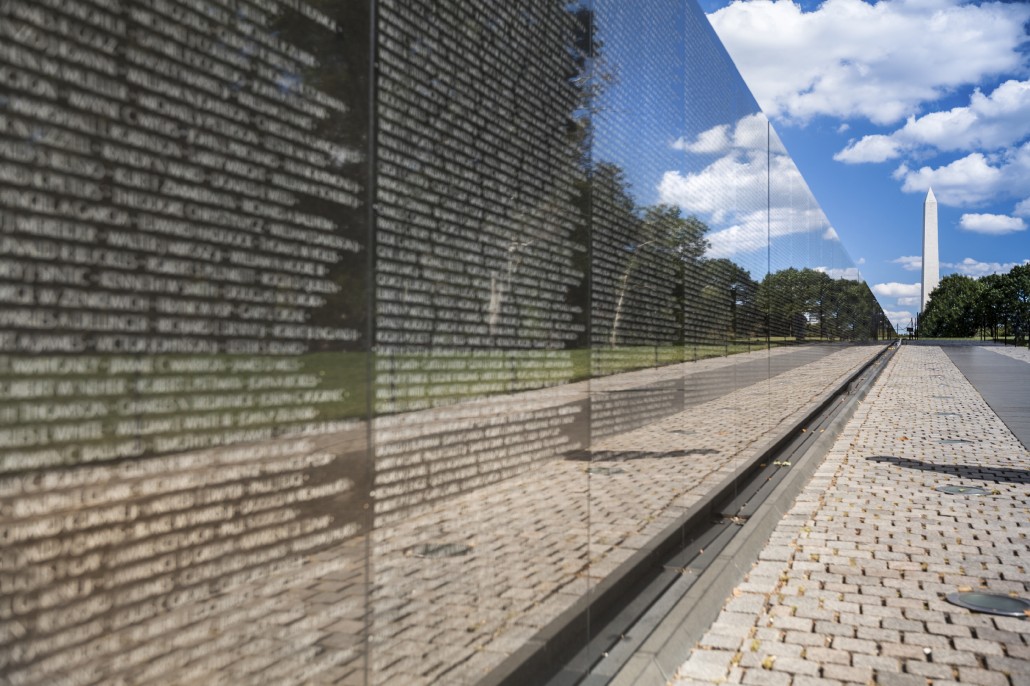
From the Annals of Warmongering –  In 1965, President Lyndon B. Johnson sent a Marine Corps Hawk air defense missile battalion to Da Nang, South Vietnam.  The troops were deployed to provide protection for the key U.S. airbase there.  This was the first deployment of U.S. combat troops to South Vietnam.  The move provoked strong reactions to an apparent new level of involvement in the Vietnamese conflict.  Communist China and the Soviet Union threatened to intervene if the U.S. continued military support of the South Vietnamese regime.  The U.S. Embassy in Moscow was attacked by demonstrators (including Vietnamese and Chinese students) in a move orchestrated by the Kremlin.  Britain and Australia supported the U.S. action, but France called for negotiations.  But the escalation of U.S. involvement in what was essentially a civil war had begun and would not end until more than 58,000 U.S. servicemen and women had lost their lives in the futile struggle.

Today in Texas History – February 8

From the Annals of Cowtown –  In 1887, Luke Short killed former Fort Worth town marshal, Timothy Isaiah “Longhair Jim” Courtright, in a gunfight.  This was likely one of the few gunfights that more or less  lived up to the Hollywood version of an actual face-to-face shootout witnessed by others.  Luke Short was a notorious figure of the old west having been a friend of Wyatt Earp, Bat Masterson and others and involved in deadly gunfights in Leadville, Colorado and Tombstone, Arizona. He was also a part owner of the legendary Long Branch  Saloon in Dodge City, Kansas.  His travels ultimately took him to Fort Worth where he acquired an interest in the White Elephant Saloon which claimed to be the “largest and most magnificent establishment in the state.”

The dispute arose when Courtright proposed that his help was needed  his “protection.”  Short was attempting to sell his interest in the White Elephant to raised money for the defense of his brother who had killed a man in San Angelo and to deal with his other legal problems.  Courtright’s interference was complicating the sale.  Short was not a man to be intimidated and rejected Courtright’s proposal claiming that he would provide any protection that his saloon needed. Courtright decided it was necessary to show Short what could happen if his services were declined.  The dispute boiled over early on the evening of February 8 when Courtright again confronted Short.  Short’s version of the events was succinct.

“Early in the evening I was getting my shoes blackened at the White Elephant, when a friend of mine asked me if there was any trouble between Courtright and myself, and I told him there was nothing. A few minutes later I was at the bar with a couple of friends when some one called me. I went out into the vestibule and saw Jim Courtright and Jake Johnson. Jake and I had talked for a little while that evening on a subject in which Jim’s name was mentioned, but no idea of a difficulty was entertained. I walked out with them upon the sidewalk, and we had some quiet talk on private affairs. I reminded him of some past transactions, not in an abusive or reproachful manner, to which he assented, but not in a very cordial way. I was standing with my thumbs in the armholes of vest and had dropped them in front of me to adjust my clothing, when he remarked ‘Well, you needn’t reach for your gun,’ and immediately put his hand in his hip-pocket and pulled his. When I saw him do that, I pulled my pistol and began shooting, for I knew that his action meant death. He must have misconstrued my intention in dropping my hands before me. I was merely adjusting my clothing, and never carry a pistol in that part of my dress.”

Before the encounter was over, Short had shot Courtright five times.  Bat Masterson who witnessed the shootout recounted the action.

“No time was wasted in the exchange of words once the men faced each other. Both drew their pistols at the same time, but, as usual, Short’s spoke first and a bullet from a Colt’s 45-calibre pistol went crashing through Courtright’s body. The shock caused him to reel backward; then he got another and still another, and by the time his lifeless form had reached the floor, Luke had succeeded in shooting him five times.”

Photo of Luke Short.

.

Today in Texas History – February 7

From the Annals of Stupidity –  In 1837, Brigadier General Felix Huston wounded his superior officer General Albert Sidney Johnston in a duel.  President Sam Houston had sent Johnston to replace Huston as commander of the Texas army.  Huston considered Houston’s rebuke to impugn his honor such that, despite his respect for Johnston, he made a challenge.  Even though Johnston was in charge of enforcing the strict no dueling policy of the Texas Army, he accepted the challenge.

The two Fighting Kentuckians met near the Lavaca River in Jackson County under a large oak tree that has become known as Dueling Oak.  Huston was an expert marksman which prompted Johnston’s second to propose that the duelists agree to shoot from the hip to lessen the chances that ASJ would be seriously injured.

Johnston waited until Huston took aim before firing his own pistol, hoping to distract the excellent shot.  The ploy failed and each man fired three times.  The affair ended when ASJ was shot through the hip on the third volley. The attending physician told ASJ that he was going to die as the ball had hit the sciatic nerve.

Magnanimous in victory, Huston offered condolences and pledged to serve under ASJ’s command.  For his part, Johnston is reputed to have never held the foolish duel against Huston even though his recovery took several months and temporarily prevented him from assuming command according to Sam Houston’s wishes.  Perhaps admonished by his actions, Huston left the Army shortly afterwards and returned to the United States.

Photo of the Dueling Oak from http://www.texasforestservice.tamu.edu.


Today in Texas History – February 6

From the Annals of Journalism –  In 1879, the  Texan,  was first published in La Grange by E. J. Glueckman.  The paper was first Czech newspaper in Texas.  The short-lived paper was renamed Slovan in  July 1879 after Frank Lidiak bought the paper. In 1885, Lidiak sold the paper to Joseph Cada, who moved it to Bryan.  The operation was completely out of business by 1889.

From the Annals of the Breweries –  In 1896, the Galveston Brewing Company began operations. The GBC operated the first major brewery in Texas with notables such as major shareholder Adolphus Busch raising $400,000 to fund the construction.   Smaller local brewers had of course been operating since the early days of the Republic.  With its sizable German population,  several commercial breweries had been established in Texas’ German and Czech communities.  The impressive Galveston complex included a large ice plant, cold-storage rooms, water wells, railroad access, and a brewery capable of producing 75,000 barrels of beer each year.    GBC featured brands such as High Grade and Seawall Bond.   GBC’s facility somehow survived the infamous 1900 Hurricane practically unscathed.  Prohibition was more of a challenge than the worst the Gulf of Mexico could throw at it,  but the GBC managed to survive for a while by producing  Galvo, a “nonintoxicating cereal beverage” of questionable quality and likely disgusting taste.

Today in Texas History – February 2

From the Annals of Thievery –  In 1848, the United States and Mexico signed the Treaty of Guadalupe Hidalgo, ending the Mexican-American War and redrawing the international boundary.  Under the terms of the treaty, Mexico lost approximately a third of its national territory including New Mexico, Nevada, Utah, Arizona, California and parts of Colorado and Wyoming.  Mexico also gave up any claim to the former Republic of Texas.   In return, the U.S. paid Mexico a paltry $15,000,000 and assumed responsibility of all claims against Mexico by American citizens.  The MAW was clearly a war of territorial aggression waged against a weaker opponent and justified by questionable claims.  Still many of the major battles were relatively close affairs, but luck was not on the side of the Mexicans.   Mexico should have built a wall.

Today in Texas History – January 26

From the Annals of Aviation –  In 1892, Elizabeth “Bessie” Coleman was born in Atlanta. In 1921 she became the world’s first licensed African-American pilot.  Bessie was the 10th of 13 children George and Susan Coleman.  George was Cherokee, Choctaw and African-American. Susan was African-American.  She grew up in Waxahacie and attended the Oklahoma Colored Agricultural and Normal University.  Unable to study in the U.S. she went to France to obtain her license.  Upon her return to the U.S., she was a sensation as a barn-storming daredevil pilot.  Unfortunately, she died in a plane crash at the age of 34.