Category Archives: Today in Texas History

Today in Texas History – February 12

From the Annals of the Blue Norther – In 1899, the coldest temperature ever recorded in Texas occurred in Tulia – south of Amarillo.  The town recorded a record minus 23 degrees Fahrenheit. This was part of the “Big Freeze,” an infamous norther that killed 40,000 cattle across the state overnight. This temperature was matched in Seminole in 1933.  Many other Texas cities set all time records or came very close.

  • Amarillo: −16 °F (−26.7 °C) all-time record
  • Austin: −1 °F (−18.3 °C) second-lowest ever
  • Brenham: 0 °F (−17.8 °C) all-time record for February
  • Brownsville: 12 °F (−11.1 °C) all-time record
  • College Station: 1 °F (−17.2 °C) all-time record for February
  • Conroe: 6 °F (−14.4 °C) tied for all-time record for February
  • Corpus Christi: 11 °F (−11.7 °C) all-time record
  • Dallas & Fort Worth: −8 °F (−22.2 °C) all-time record
  • Danevang: 3 °F (−16.1 °C) all-time record
  • Galveston: 8 °F (−13.3 °C) all-time record
  • Houston: 6 °F (−14.4 °C) second-lowest ever
  • Marshall: −9 °F (−22.8 °C) all-time record
  • San Antonio: 4 °F (−15.6 °C) second-lowest ever
 

Today in Texas History – February 9

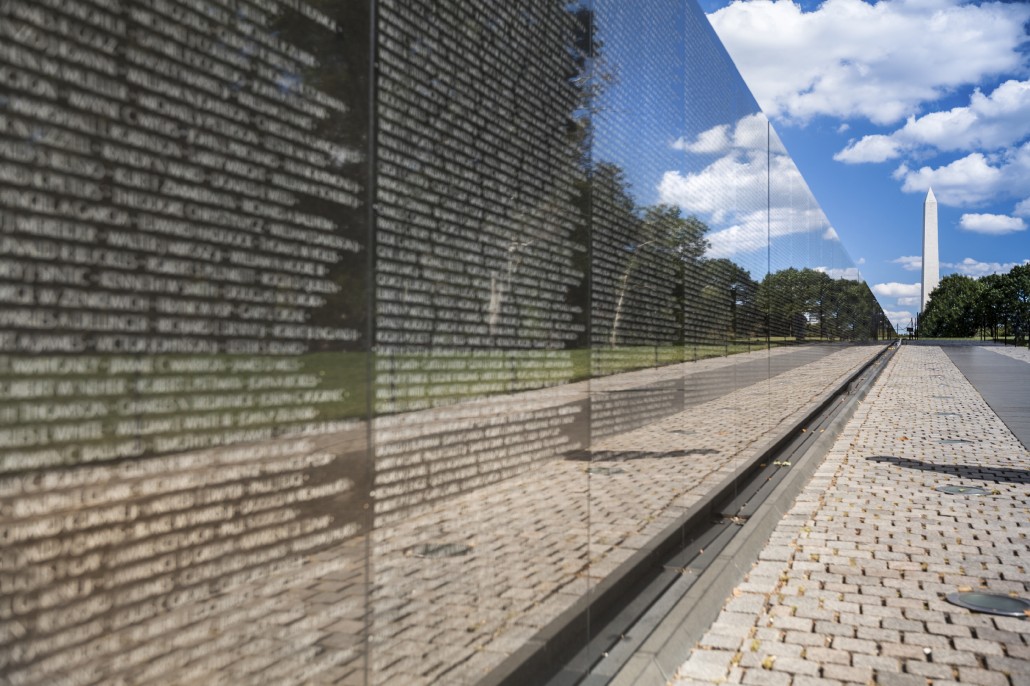
From the Annals of the U.S. Wars of Choice –  In 1965, President Lyndon B. Johnson sent a Marine Corps Hawk air defense missile battalion to Da Nang, South Vietnam.  The troops were deployed to provide protection for the key U.S. airbase there.  This was the first deployment of U.S. combat troops to South Vietnam.  The move provoked strong reactions to an apparent new level of involvement in the Vietnamese conflict.  Communist China and the Soviet Union threatened to intervene if the U.S. continued military support of the South Vietnamese regime.  The U.S. Embassy in Moscow was attacked by demonstrators (including Vietnamese and Chinese students) in a move orchestrated by the Kremlin.  Britain and Australia supported the U.S. action, but France called for negotiations.

LBJ had little appreciation of the horrors of war as he had avoided any real combat action in WWII and he was known throughout his life as being an intense physical coward.  He showed no hesitation in sending others off to die in his foolish war. The escalation of U.S. involvement in what had been essentially a civil war was now official and the mistaken judgment of LBJ in blundering into the Vietnam War would not end until more than 58,000 U.S. servicemen and women had lost their lives in the futile struggle.

Today in Texas History – February 8

Dallas Texans Logo | Flickr - Photo Sharing!

From the Annals of Professional Football – In 1963, Lamar Hunt moved the Dallas Texans to Kansas City and renamed the team the Chiefs.  Hunt owned the AFL’s Dallas franchise which began playing , owner of the American Football League franchise in Dallas, TX, moved the operation to Kansas City. The new team was named the Chiefs.  It started operations in 1960, the first AFL season and the same year as the Dallas Cowboys. The team immediately faced serious competition from a new franchise in the older more established league.  The Texans had a strong home-state identity with quarterback Cotton Davidson (Baylor), fullback Jack Spikes (TCU), and running back Abner Haynes (North Texas State). Haynes, was named the league’s Player of the Year after leading the AFL with 875 yards rushing and 9 touchdowns. The Texans were an offense-centric, high scoring team, but three closes losses kept them from challenging for the division title.  They finished the 1960 season in second place in the West with an 8-6 record.  The Texans averaged 24,500 for their home games at the Cotton Bowl, the highest average in the league. Hunt is considered to be the founding father of the AFL and one of the main reasons the league was able to survive until it merged with NFL in the Super Bowl era.

Hunt’s team is not to be confused with the 1952 incarnation of the Dallas Texans.  That was an NFL team which was a transplanted version of the New York Yanks.  The team lasted only one season in Dallas and was the last NFL franchise to fold up shop when owner Giles Miller sold the ailing franchise back to the league.

Red desperately wants a Dallas Texans t-shirt with that logo.

Today in Texas History – February 7

From the Annals of the Code Duello – In 1837, to Generals of the Texas Army faced off in a duel for command of the Army. Brig. Gen. Albert Sidney Johnston was wounded in the pelvis by Brig. Gen. Felix Huston.  President Sam Houston had ordered Johnston to replace Huston as commander of the Texas Army.  Huston had attracted a large group of adventurers and undisciplined troops to the Army and Sam Houston believed that under his command the Army would not be able to repel the seemingly imminent invasion from Mexico.  Huston was offended by the lack of confidence in his leadership.  Even though he professed admiration for ASJ, he felt compelled to challenge him to a duel.  Observers claimed that Johnston refused to fire. Johnston’s wound was so severe that he was unable to take command.  Some believe that his wound in the duel caused nerve damage such that he was unable to detect that he had been shot during the Battle of Shiloh.  ASJ died after the battle from loss of blood – his wound had not been fatal.  Huston eventually moved to New Orleans where he opened a law practice and became an ardent secessionist.

Today in Texas History – February 6

From the Annals of the Bohemians –  In 1879, E. J. Glueckman published the first issue of the Texan.   This was the first Czech newspaper in Texas.  The paper lasted about decade focusing on Czech culture in Texas and catering to the many Czech immigrants who came to Texas beginning in the early 1850s.  Czech immigrants established settlements primarily in Austin, Fayette, Lavaca, and Washington counties.  The Texan was just the first of many such periodicals which celebrated the rich contribution of Czechs to Texas.  By the end of the twentieth century, more than thirty Czech newspapers and periodicals had been published.  Today Czech traditions are still alive in Texas music, food, beer, community groups and festivals.

Today in Texas History – February 5

From the Annals of the Highways –  In 1844, the Congress of the Republic of Texas authorized a commission to oversee the construction of the Central National Road. The CNR was planned to run from the Elm Fork of the Trinity River to Kiomatia Crossing on the Red River in far northeast Texas.  It was intended to become part of a larger international highway ultimately connecting San Antonio to St. Louis.  The Congress provided that the CNR was to be at least 30 feet wide with no tree stumps taller than 12 inches from the ground.  Bridges were to be at least 15 feet wide and built of good substantial materials.  The project was to be paid for with public land grants to contractors building the road. The rate was to be 160 acres of land for every mile constructed.

The commissioners chose George Stell of Paris, Texas, as surveyor for the project.  Surveying work began in April 1844. Stell and his assistant traveled northeast, measuring and marking the exact route, which passed through the present counties of Dallas, Rockwall, Collin, Hunt, Fannin, Lamar and Red River. The route largely  utilized existing prairies and natural stream crossings – avoiding densely wooded areas and river crossing requiring bridges.  It is unclear if construction was ever completed.  The CNR appears to have been short-lived and was replaced by the Preston Road and other early routes.


Today in Texas History – February 2

Image result for ben hogan

From the Annals of the Highway –  In 1949, professional golfer Ben Hogan and his wife Valerie were seriously injured in an auto accident.  Hogan was born in Stephenville but raised in Dublin and Fort Worth.  After his father committed suicide when Hogan was 9, he began to caddy at Glen Garden CC south of town where he met his later tour rival Byron Nelson.  He turned pro at age 18 but struggled for almost a decade before winning a professional event.  But before his accident in 1949, Hogan had won 54 times on the PGA Tour including two PGA Championships and one U.S. Open victory.

The Hogans somehow survived the early morning head-on collision with a Greyhound bus on a fog-shrouded bridge east of Van Horn.  Hogan threw himself across Valerie in order to protect her.  He likely would have been killed otherwise as the steering column punctured the driver’s seat.  Hogan suffered a double fracture of his pelvis, a fractured collar bone and left ankle and a chipped rib.  He also suffered blood clots that would cause circulatory problems for the remainder of his life.

It seemed doubtful that he would ever compete again at the high level to which his fans were accustomed.  After 59 days in the hospital, Hogan began his rehabilitation – mostly by extensive walking. He was back on the course by November and returned to the PGA Tour to start the season at the Los Angeles Open at Riviera Country Club.  He finished tied with Sam Snead  but lost in a playoff.  Hogan would go on the win the U.S. Open in 1950 and five more major championships before he retired in 1959.


Today in Texas History – February 1

From the Annals of the Statehouse –  In 1882, Nimrod Norton and Joseph Lee ceremonially broke ground on the site of the present Texas Capitol Building.  Norton and Lee were the building commissioners in charge of overseeing construction.  A design competition resulted in eight architects submitting eleven different designs for the building.  In May 1881 the Capitol Board approved the design entered by Elijah E. Meyers of Detroit. The building commission then advertised for a contractor who would build the Capitol in exchange for the three million acres of public land. There were only two bidders and the BC chose Mathias Schnell of Rock Island, Illinois. Schnell ultimately assigned the contract to Taylor, Babcock and Company, a Chicago firm.  Abner Taylor became the chief contractor but subcontracted the work to Gustav Wilke also of Chicago.  The  Capitol was intended to be constructed from Texas limestone but impurities in the rock made it impractical.  The design was changed – made less ornate – and the main building material was changed to red granite from Marble Mountain near Marble Falls.  The Renaissance Revival structure was completed in about six years for a cost of $3.75 million.

Today in Texas History – January 30

Lightnin' strikes ba by Lightnin' Hopkins, LP with tromatism - Ref:115054595

From the Annals of the Bluesmen – In 1982, Sam “Lightnin” Hopkins passed.  Hopkins was born in Centerville and began his music career at age 8 playing with a homemade cigar-box guitar with chicken-wire strings. He was soon playing with his  cousin, Alger (Texas) Alexander and Blind Lemon Jefferson who were both mentors to the young musician. By the time he was 20 Hopkins was playing the blues on the road.  Like all good bluesmen, Hopkins served time in jail in the 1930s for an unknown offense.  He continued with music after his release with mixed success living for a while in Houston.  At one point he returned to Centerville to work as a farm hand.  By 1946 he was back in Houston where he met Lola Anne Cullum of Aladdin Records from Los Angeles.  She convinced Hopkins to travel to Los Angeles, where he accompanied the pianist Wilson Smith. The duo recorded twelve tracks in their first sessions in 1946. An Aladdin executive decided the pair needed more dynamism in their names and dubbed Hopkins “Lightnin'” and Wilson “Thunder”. He returned to Houston and continued recording with Gold Star records playing mostly in Texas blues clubs.  In 1959, Hopkins was contacted by music researcher Mack McCormick who managed to get Hopkins’ music in front of white audiences in Houston and California just in time to catch the folk-blues revival of the 1960s.  He switched to an acoustic guitar to capitalize on the trend and later began getting gigs as an opening act for such rock bands. The documentary, The Blues According to Lightnin’ Hopkins captures much of his on-stage brilliance and behind the scenes life.  Over his career, Hopkins recorded a total of more than eighty-five albums.

Today in Texas History – January 29

From the Annals of the Abolitionists – In 1844, President Sam Houston granted an empresario contract to abolitionist Charles Fenton Mercer to establish a colony in the Republic of Texas.  A Virginia native, CFM had a distinguished career as an Lt. Colonel of a Virginia regiment in the War of 1812, member of the Virginia House of Delegates, U.S. Congressman for over 20 years, and head of the Chesapeake and Ohio Canal Co. He was a dedicated abolitionist and instrumental in attempting to resettle free African-Americans in Africa – a now discredited belief as a solution to slavery among many abolitionists of the time.   After retiring from public service, Mercer became interested in obtaining an empresario license in Texas – making seven trips to the new nation.  Houston granted him a contract for a colony east of Peter’s Colony but only after vetoing a bill that would have restricted the President’s rights in that regard.  Mercer’s contract was always controversial because of his well-known abolitionist sentiments. Nonetheless, he organized the Texas Association and began selling shares for $500 each. By the end of the year, more than 100 families had complied with the requirements of his contract and received land certificates. Land disputes and court cases, however, proved top be too much of a burden on Mercer’s time and finances. In 1852 he assigned his interest in the contract to George Hancock of Kentucky and other members of the Texas Association, receiving in return an annuity of $2,000.