Tag Archives: Texas History

Today in Texas History – August 27

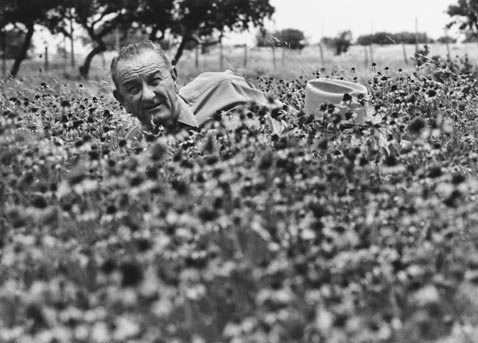
From the Annals of Texas Presidents –  In 1908, Lyndon Baines Johnson (LBJ) was born at his family’s home near Stonewall.   He was the first truly Texas son to become President.  Dwight Eisenhower was born in Denison but otherwise had little connection to the state.  LBJ rose to power representing Texas in the House of Representative and Senate.  But, he probably never would have become President but for the assassination of John F. Kennedy in Dallas in 1963.  LBJ’s legacy of tremendous accomplishment in civil rights and attempts to eliminate poverty were overwhelmed by the Vietnam War.

Today in Texas History – August 26

From the Annals of Police Thuggery –  In 1870, one of the more violent episodes in the infamous Sutton-Taylor Feud occurred.  The STF was one of the longest bloodiest feuds in early Texas.  The feud allegedly arose from disputes following the Civil War. Josiah Taylor was a Virginian who settled near Cuero in DeWitt County. His sons, Pitkin and Creed Taylor and their sons, nephews, in-laws, and friends were the mainstay of that faction. William E. Sutton was a native of Fayette County who had moved to DeWitt County.  Many of the Sutton group were associated with the State Police.  There appears to be no evidence to support the claim that the STF began in another state and was carried forward to Texas.  The tortured path of the STF is hard to follow, but it apparently began in  1866, when Buck Taylor shot a black sergeant who came to a dance at Taylor’s uncle’s home, and Hays Taylor killed a black soldier in an Indianola saloon.  The violent Taylor saga continued when  brothers Hays and Doby Taylor killed two Union soldiers at Mason in November 1867 and then escaped to Karnes County.  In March 1868, Deputy Sheriff William Sutton led a posse in pursuit of a gang of horse thieves. When the gang was caught in Bastrop, Charley Taylor was killed and James Sharp was taken prisoner and then shot while “trying to escape.”

The Taylors claim that the STF began with the killing of Buck Taylor and Dick Chisholm at Clinton on Christmas Eve in 1868.  Buck apparently claimed Sutton had been dishonest in some horse dealing and a gun fight erupted.  Ultimately, the STF devolved into a running battle between the Taylors and  party and  the State Police under Edmund J. Davis and orchestrated largely by Capt. Jack Helm.  The State Police were involved in the killing of several members of the Taylor clan.  One of the worst episodes was the assassination by the State Police of Henry and William Kelly, sons-in-law of Pitkin Taylor, on August 26, 1870. The Kellys were arrested on a trivial charge, taken a few miles from home and shot.  Helm was dismissed after the shooting, but continued to serve as sheriff of Karnes County.   Sutton then became the de facto leader of the group.  Helm had the distinction of later being killed by John Wesley Hardin in Wilson County.

Today in Texas History – August 25

From the Annals of the “Great” War –  In 1917, the 90th Division of the U.S. Army was activated at Camp Travis in San Antonio.  The division was initially formed from Texas and Oklahoma.   Known as the “Tough Ombres,” “Texas’ Own,” or the Alamo Division, it adopted the monogram insignia T-O in France during World War I. The division was posted in France in 1918 and saw action in Lorraine and in the St. Mihiel and Meuse-Argonne operations.  The 90th suffered 7549 casualties with a total of 1091 killed in action and 6458 wounded.  After the Armistice the Ninetieth did occupation duty in Germany and came home in 1919 for demobilization.   Red’s grandfather served as Lieutenant in the 90th in WWI.

Photo of 2nd Battalion, 358th Infantry, 90th Division.

Today in Texas History – August 24

From the Annals of Independence –  In 1821, the long Mexican fight for independence from Spain came to an end with the signing of the Treaty of Cordoba.   The treaty was signed by Juan O’Donoju, Captain General of New Spain and  met Agustín de Iturbide, General of the Mexican Army of the Three Guarantees.  The war had begun on September 16, 1810 when Father Miguel Hidalgo y Costilla issued the famous “El Grito” from the steps of his parish church in Dolores, a small town east of Guanajuato.  Spain’s attempt to control Mexico was doomed after former royalist Iturbide came to terms with independence leader Vicente Guerrero in 1820.   After 10 years of turmoil and incredible bloodshed from mostly local revolts and guerrilla actions, the unification of the factions effectively ended Spanish control.  At the time of the treaty, Spain only controlled Mexico City and Veracruz and the end of colonial rule was inevitable.

Today in Texas History – August 21

From the Annals of Heroism –  In 1968, Staff Sgt. Marvin Young was killed in action near Ben Cui, Vietnam.  Young was a native of Alpine who enlisted in the army in 1966. He was leading a patrol of Company C, Fifth Infantry, Twenty-fifth Infantry Division when they were attacked by a large force of North Vietnamese. When the squad leader was killed, Young assumed command and repeatedly exposed himself to enemy fire, while encouraging his men.  He ignored orders to pull back and remained behind to assist several of his men who were unable to withdraw.  Even after being wounded, he refused assistance and stayed to cover the withdrawal of other troops.  He was posthumously awarded the Congressional Medal of Honor.

Photo from http://www.vvmf.org

Today in Texas History – August 20

From the Annals of the Civil War – In 1866, the Civil War officially ended when President Andrew Johnson issued a proclamation of peace between the United States and Texas.  Johnson declared that “the insurrection in the State of Texas has been completely and everywhere suppressed and ended.” Johnson had previously declared a state of peace between the U.S. and the other ten Confederate states on April 2, 1866.  Being the most remote of the rebellious states, fighting in Texas did not end until May 13, 1866 when the last land battle of the war took place at Palmito Ranch near Brownsville.

Photo of Andrew Johnson from historyplace.com

Today in Texas History – August 19

From the Annals of the Methodists –  In 1837, Robert Alexander crossed the Sabine River and began preaching his way westward – the start of a ministry of forty-five years in Texas.  Alexander quickly formed the San Augustine circuit and by mid-October formed the first Methodist missionary society in Texas during a camp meeting held at Caney Creek.  The mission was later organized into the Texas Conference.  Alexander served as first presiding elder of the several districts including  Galveston, Huntsville, and Chappell Hill. His pastoral appointments included Belton, Chappell Hill, Galveston, and Waco.  When the Methodists split over slavery in 1844, Alexander’s colleagues elected him delegate to the Louisville Convention that organized the Methodist Episcopal Church, South, in 1845. They subsequently elected him to nine succeeding General Conferences.

Today in Texas History – August 18

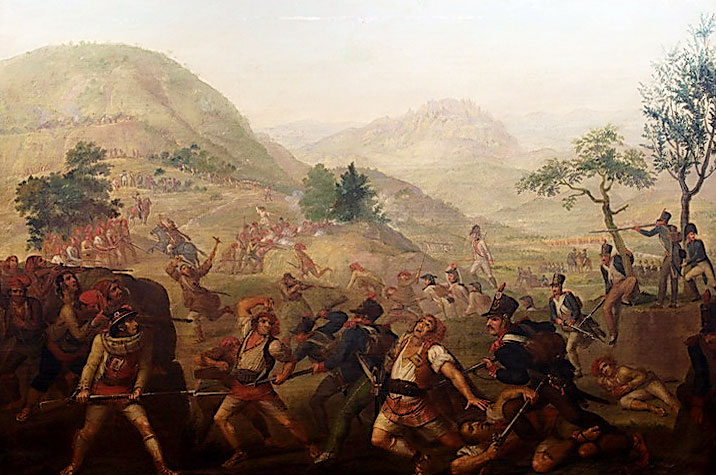
From the Annals of Nascent Revolution –  In 1813, the Battle of Medina was fought.  The fight was between the Gutierrez-Magee Expedition and Spanish troops and took place some 20 miles south of San Antonio de Bexar.  The battle was the end of the effort led by Bernardo Gutierrez de Lara to break Texas away from Spain and declare and independent republic.  The expedition was an offshoot of the initial failure of the Mexican War for Independence that began with El Grito by Padred Hidalgo in September 16 , 1810.  After some initial success, the expedition was decimated at Medina losing some 1,300 men and effectively ending the revolutionary movement in Texas. 

Today in Texas History – August 17

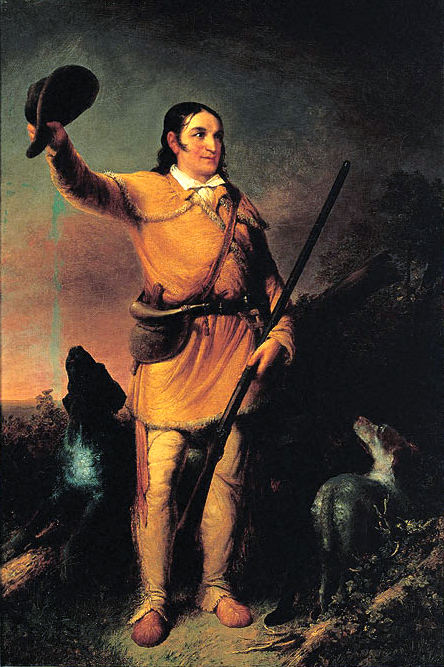
From the Annals of Bad Luck –   David Crockett was born in what is now Greene County, Tennessee (technically a part of N. Carolina at the time of his birth).  Crockett’s family traversed Tennessee in a series of failed attempts to establish businesses.  Crockett himself was first employed as a drover in a cattle drive from Tennessee to Virginia and was also indentured at various times to pay off his father’s debts.  Crockett’s political career began with his appointment as a justice of the peace in 1817.  From there he sought and won office to the Tennessee state assembly in 1821 and served several terms representing different districts.  He lost in his first run for Congress in 1825, but after being encouraged to try again, he won election in 1827.  Crockett was a consistent champion for the rights of poor settlers whose property rights were endangered by a complicated system of land grants. He introduced a bill to abolish West Point which he viewed as providing free education for sons of the wealthy.   He served two terms before being voted out for his opposition to the Indian Removal Act.  He was returned to Congress 2 years later and served 2 more terms before being defeated in 1835.  Crockett arguably was the best known American of his day – especially after publishing his autobiography.

His decision to go to Texas was likely motivated by a desire to continue his political career.  Crockett was 49 and his military service had been largely limited to work as a scout and hunter finding food for the troops.  Some have speculated that he believed his fame would translate into the presidency of a newly formed Texas nation.   The details of his death at the Alamo have been hotly debated.  More on that on another Today in Texas History.

Today in Texas History – August 14

From the Annals of Print Journalism –  In 1819, Eli Harris published the first edition of the Texas Republican  in Nacogdoches.  The paper is believed to be the earliest newspaper published in Texas for which records exist in contemporary St. Louis and New Orleans papers. It is unknown how many issues of the Republican were printed.  It was short-lived as  sources indicate that the Texas Republican  had discontinued publication by September 1819.